Showing posts with label Equipment. Show all posts
Showing posts with label Equipment. Show all posts
Friday, March 23, 2012


Saturday, March 10, 2012
When not to use WD-40

Details here: http://diy.stackexchange.com/questions/6226/when-should-i-not-use-wd-40
I know some drivers use WD-40 to de-squeak and lubricate carriage parts, particularly springs. As you'll read in this web site, WD-40 is not really a permanent lubricant. It's too thin for that purpose plus it *attracts* dirt.


So far, for me, I find good quality spray silicone lasts fair long and does NOT attract dirt or even leave any visible trace (i.e. good for use on high quality polished carriage parts.) I mainly use it to quiet carriage leaf springs.
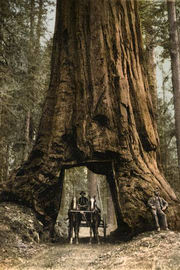
Usually this fix last forever....well, I can't actually swear to that since I haven't lived that long.
Tuesday, December 20, 2011
Troika Speed
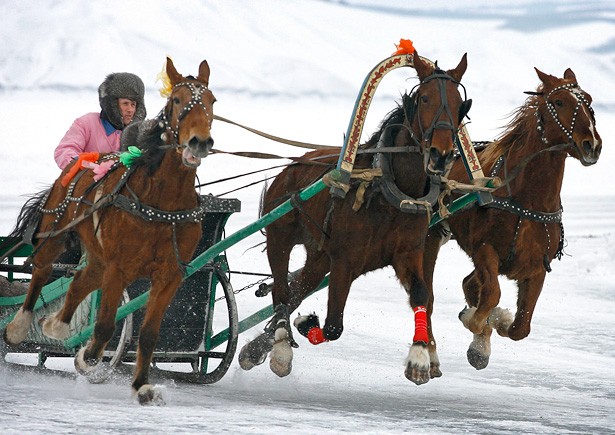
A troika, a three-horse drawn sledge, competes on the frozen Yenisey river during an amateur horse race near the settlement of Novosyolovo. The Ice Derby has been held in Novosyolovo annually at the end of each winter since 1969, drawing participants from the entire region.
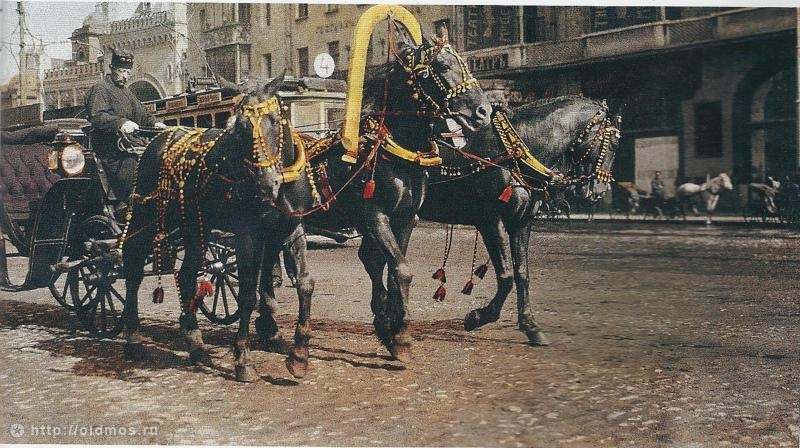
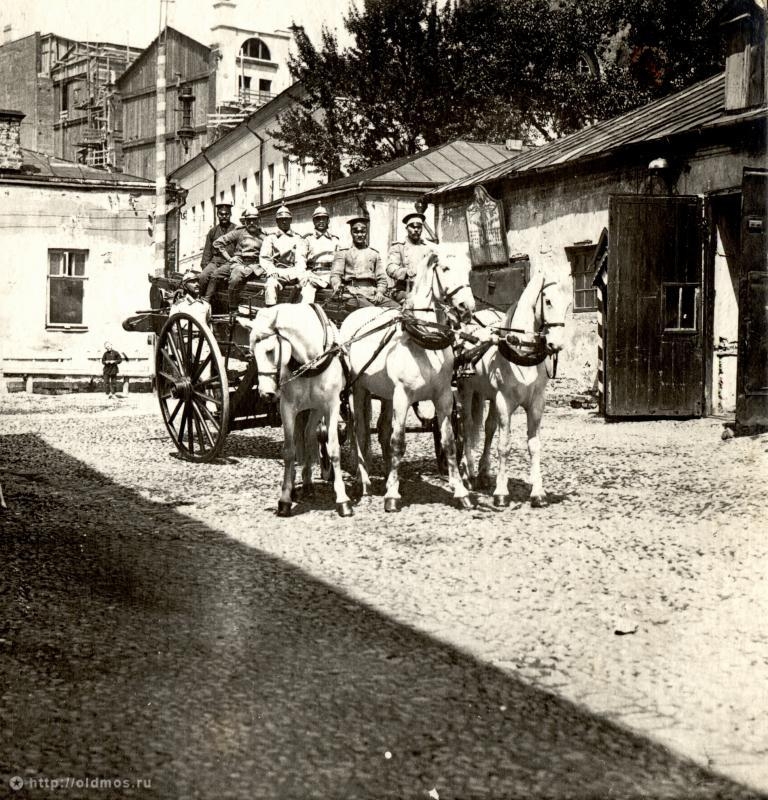
Troika Fire Department Horses
Thursday, April 21, 2011
Monday, January 17, 2011
One Horse Open Sleigh
 Liz and Dave Herrick enjoying the ride!
(Br. 1999, Green Meads Galaxy x Rum Brook Promis Promises)
Owned by David and Liz Herrick
Mount Vernon, NH

Wednesday, January 20, 2010
Don't hook your horse like this!
This is not fair to the horse or to the people involved.
All participants are SO fortunate not to have gotten injured in this episode.
Unfortunately, it is scenarios like this that make business for trainers.
It is so unnecessary to go about it this way.
I can hardly count all the things that are unsafe and just plain wrong with this.
I do NOT want to get the call to fix this horse!
Saturday, March 7, 2009
The Transition from Horses

Trevithicks steam carriage, world’s first vehicle designed for carrying passengers.
"A steam carriage intended for passengers was built in England in 1803 by Richard Trevithick. A replica of it was built recently and has been touring Europe. It was basically a carriage stuck on top of a crude steam tractor, the passengers were a good height above the ground. It was also a commercial failure but had the distinction of being the first self powered land vehicle in the world designed to carry passengers." source

Note the steering mechanism. Pre-steering wheel!
Wednesday, March 4, 2009
The Use of the Parked Stance
 The Parked Horse with kicking strap and mud guard on the wheel
From: Moseman's Illustrated Catalog of Horse Furnishing Goods published in 1893.
The horse in this illustration has been asked to assume a "Parked" stance, making it less likely that it will move at the halt. It was important that the horse not take a step as the Lady dismounted from the carriage. Not only would her clothing be soiled, she could have been knocked to the ground which would have been a terrible social event for both her and her gentleman friend. Note the wicker wheel cover on the rear wheel used to protect her clothing.
Today's carriage drivers are taught to *always* be the first to mount and last to dismount from a vehicle so as to remain in the best position to control the horse(s). This driver is on the ground assisting his Lady friend and has left a passenger seated in the carriage, yet another reason to have the horse assume the "Parked" stance and be less likely to step forward. It is interesting that there was so much care taken to protect the Lady while mounting and dismounting yet the other lady passenger (perhaps she's even a child) has been left in a situation considered unsafe by today's standards.
Many of today's drivers assume the "Parked" stance is not traditional and should not be used by today's carriage horses, particularly in those in competitions. Carriage drivers will train their horses who have learned this "Parked" stance to never assume that position when asked to halt. The acceptability of the stance is more a matter of when it would be useful. Halting at X in a dressage test or standing in a line up in a carriage ring class in the "Parked" stance would not be appropriate since it is expected in those situations that the horse be capable of moving off in any direction immediately by instruction of the driver! It is a disobedience for the horse who knows how to stand in the "Parked" position to assume the stance without being instructed by the driver to do so. However, if a driver had a Lady passenger entering or exiting a vehicle, it might be quite appropriate - and traditional - to ask their horse(s) to stand in a "Parked" stance. This action is not seen with much frequency today in carriage driving because it is not called for in competition. Passengers and drivers are not usually called on to mount and dismount in a ring class or any of the other tests used in carriage competition.
Note the use of the kicking strap which is very ornately shaped and decorated by the harness maker!
©Jeff Morse ~ 2009
Subscribe to:
Posts (Atom)

 Posts

